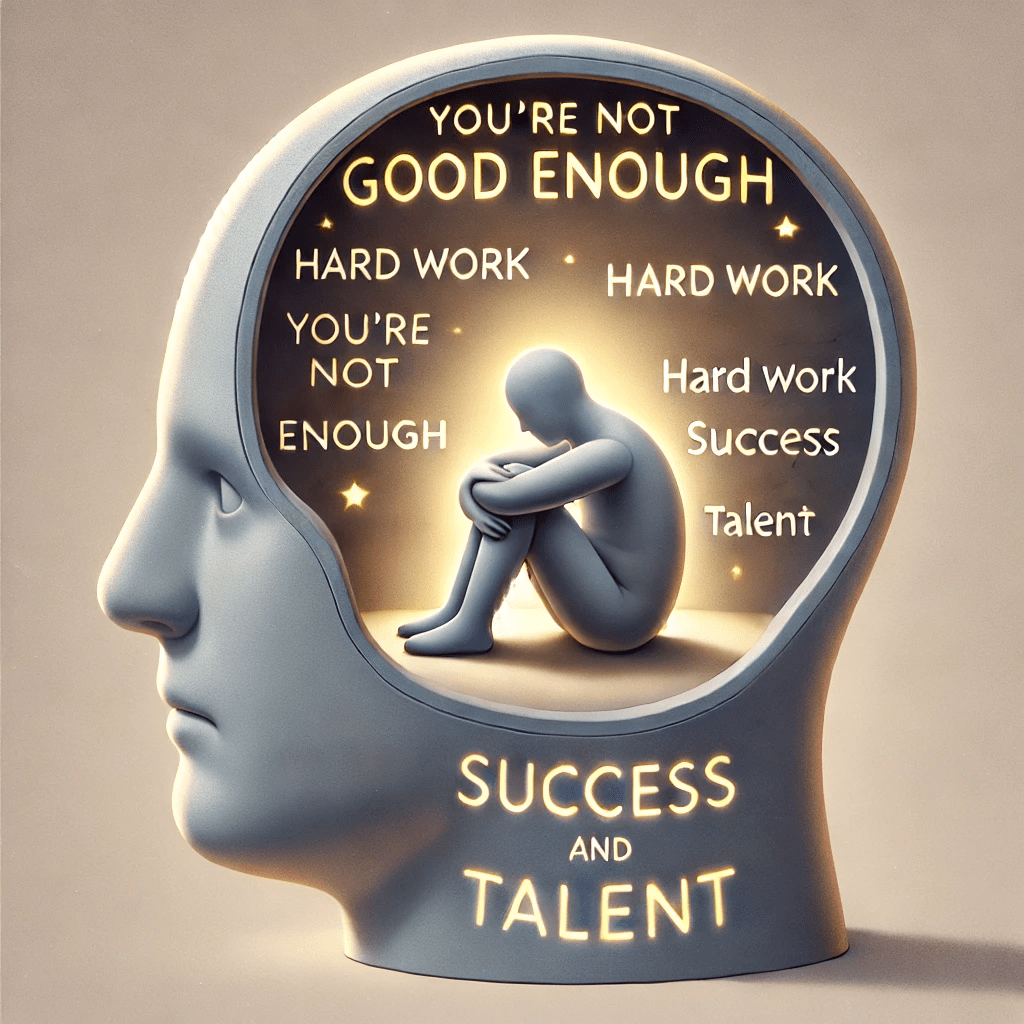
Have you ever worked really hard on something, like a science project or a piece of art, and when people tell you, “Wow, this is amazing!” you think to yourself, “I don’t think I deserve that compliment. I just got lucky!” That feeling, where you think you’re not as good as people say you are, is called imposter syndrome.
So, What Exactly Is It?
Imposter syndrome is when someone feels like they’re not good enough, even if they have proof that they are. It’s like a little voice inside your head saying, “You’re not as smart or as talented as people think. Maybe you just fooled them.” The tricky part? That voice is wrong, but it can still make you feel unsure of yourself.
This can happen to anyone: kids, adults, teachers, athletes, or even famous people. It doesn’t mean you’ve done something wrong—it just means you’re doubting yourself.
Real-Life Example #1: Sarah the Soccer Star
Sarah is the best soccer player on her team. She scores goals in almost every game. After one big win, her coach says, “You were incredible out there, Sarah!” But Sarah thinks, “I didn’t do anything special. The other team just wasn’t very good today.”
Sarah has imposter syndrome because she’s not giving herself credit for her hard work, practice, and talent. Instead, she thinks her success is just luck.
Real-Life Example #2: Tom and the Spelling Bee
Tom studied every night for weeks to prepare for his school’s spelling bee. When he won first place, people cheered, and his teacher said, “You earned it, Tom!” But Tom thought, “I only won because the other kids got harder words.”
Even though Tom practiced and deserved to win, imposter syndrome made him doubt himself.
Why Do People Feel This Way?
There are a few reasons why people might feel like imposters:
1. They compare themselves to others too much. (“She’s better at this than me!”)
2. They think they have to be perfect all the time. (“If I make a mistake, everyone will know I’m not really that good.”)
3. They don’t see all the hard work they’ve done. (“It wasn’t a big deal.”)
How Can You Beat Imposter Syndrome?
Here are some easy ways to remind yourself how awesome you really are:
1. Remember your hard work. Think about the time, effort, and practice you put into getting good at something. Success doesn’t happen by accident!
2. Talk to someone you trust. Share your feelings with a parent, teacher, or friend. They can remind you how talented you are.
3. Write it down. Keep a list of your accomplishments—big or small. Maybe you aced a test, helped a friend, or learned a new skill. When you feel unsure, read your list to remind yourself of what you’ve done.
4. Accept compliments. When someone says, “Great job!” instead of brushing it off, try saying, “Thank you.” It might feel weird at first, but it helps you own your success.
The Truth About Imposter Syndrome
Feeling like an imposter doesn’t mean you are one. It just means you’re human. Even the most successful people in the world, like scientists, athletes, or movie stars, feel like this sometimes. But what makes a difference is learning to believe in yourself and your abilities.
So next time you hear that little voice saying, “You’re not good enough,” take a deep breath and remind yourself: “I worked hard for this, and I deserve it!”
You’ve got this!
 The Art of Finding Justice
Leave a comment