Early Life and Rise to Power:
• Birth: Haile Selassie was born on July 23, 1892, in Ejersa Goro, Harar, Ethiopia.
• Birth Name: His birth name was Lij Tafari Makonnen. He was born into the Ethiopian aristocracy, with his father, Ras Makonnen, being a cousin and close ally of Emperor Menelik II.
• Coronation: Tafari Makonnen became Ras Tafari and later ascended to the throne as Emperor Haile Selassie I on November 2, 1930, after the death of Empress Zewditu. “Haile Selassie” means “Power of the Trinity.”
Leadership and International Influence:
• Modernization: Haile Selassie was known for his efforts to modernize Ethiopia, including the introduction of the first written constitution in 1931, and efforts to develop infrastructure, education, and the economy.
• League of Nations Speech: In 1936, after Mussolini’s Italy invaded Ethiopia, Haile Selassie gave a historic speech at the League of Nations in Geneva, condemning the aggression and warning of the dangers of appeasement. The speech is often cited as prophetic, given the later outbreak of World War II.
Exile and Return:
• Exile: Haile Selassie went into exile in 1936 following the fall of Addis Ababa to Italian forces. He lived in Bath, England, during this period.
• Restoration: In 1941, with support from Allied forces, Haile Selassie was restored to the throne after the defeat of Italian forces in Ethiopia during World War II.
Haile Selassie and the Rastafari Movement:
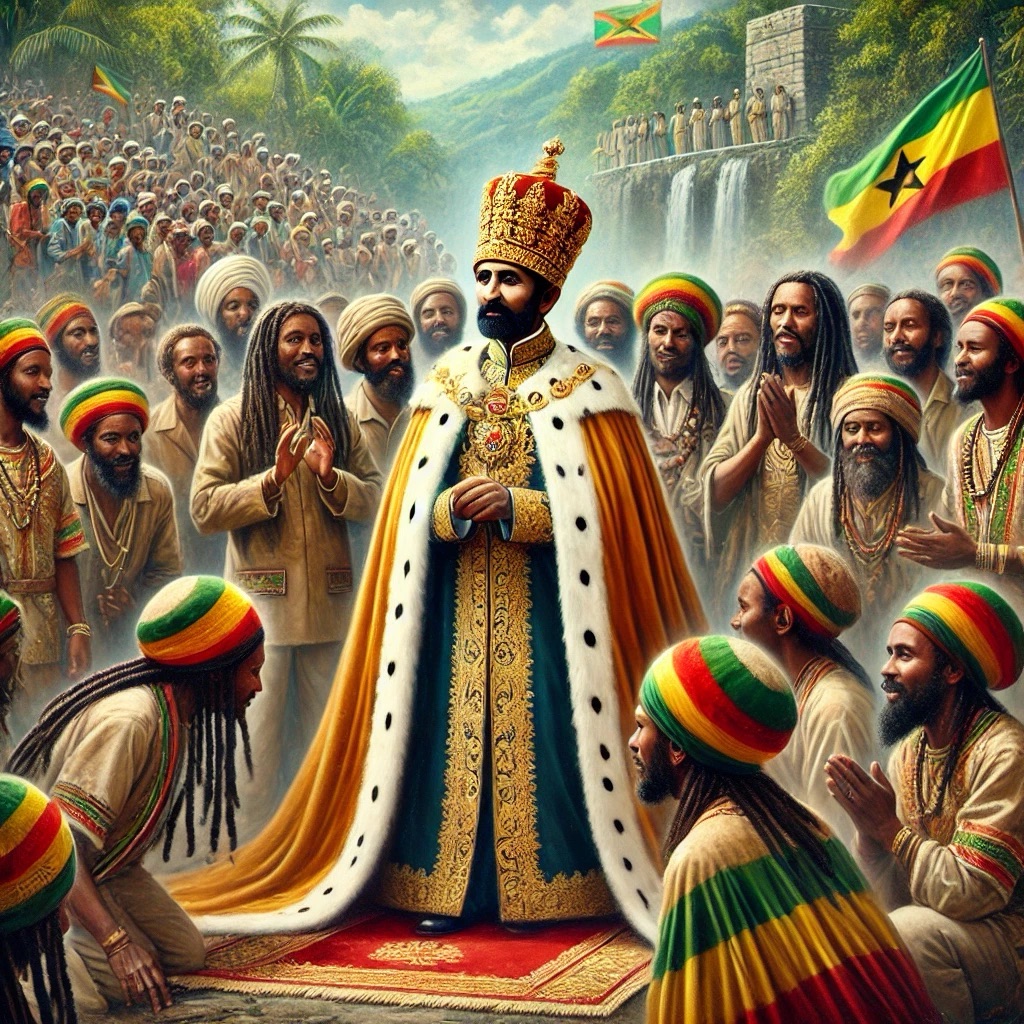
• Rastafari Movement: The Rastafari movement, which began in Jamaica in the 1930s, identifies Haile Selassie as the returned Messiah. The movement takes its name from his pre-imperial title, “Ras Tafari.”
• Visit to Jamaica: On April 21, 1966, Haile Selassie visited Jamaica, where he was greeted by thousands of Rastafarians who viewed the visit as a divine event. This day is celebrated as Grounation Day by Rastafarians.
Later Years and Legacy:
• Overthrow: Haile Selassie was overthrown in a coup by the Derg, a Marxist military junta, on September 12, 1974. He was placed under house arrest in the Jubilee Palace.
• Death: Haile Selassie died on August 27, 1975. His death was officially attributed to natural causes, but many believe he was murdered by the Derg.
Conclusion:
• Legacy: Haile Selassie’s legacy is multifaceted. He is celebrated as a symbol of African independence and unity, particularly through his role in founding the Organization of African Unity (OAU) in 1963. He remains a significant figure in Ethiopian history and a revered spiritual leader in the Rastafari movement.
 The Art of Finding Justice
Leave a comment